5/9/2026
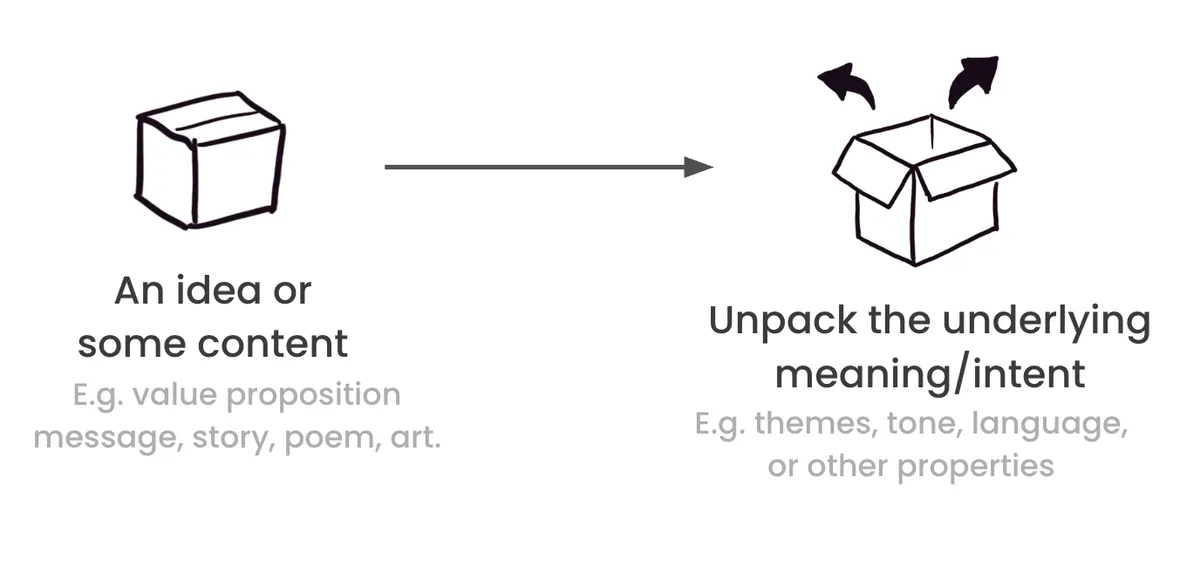
This article is part of a series from Leveraging patterns. Here we cover pattern extraction: analysing content and extracting properties—meaning, themes, language, tone, and more.
What it is
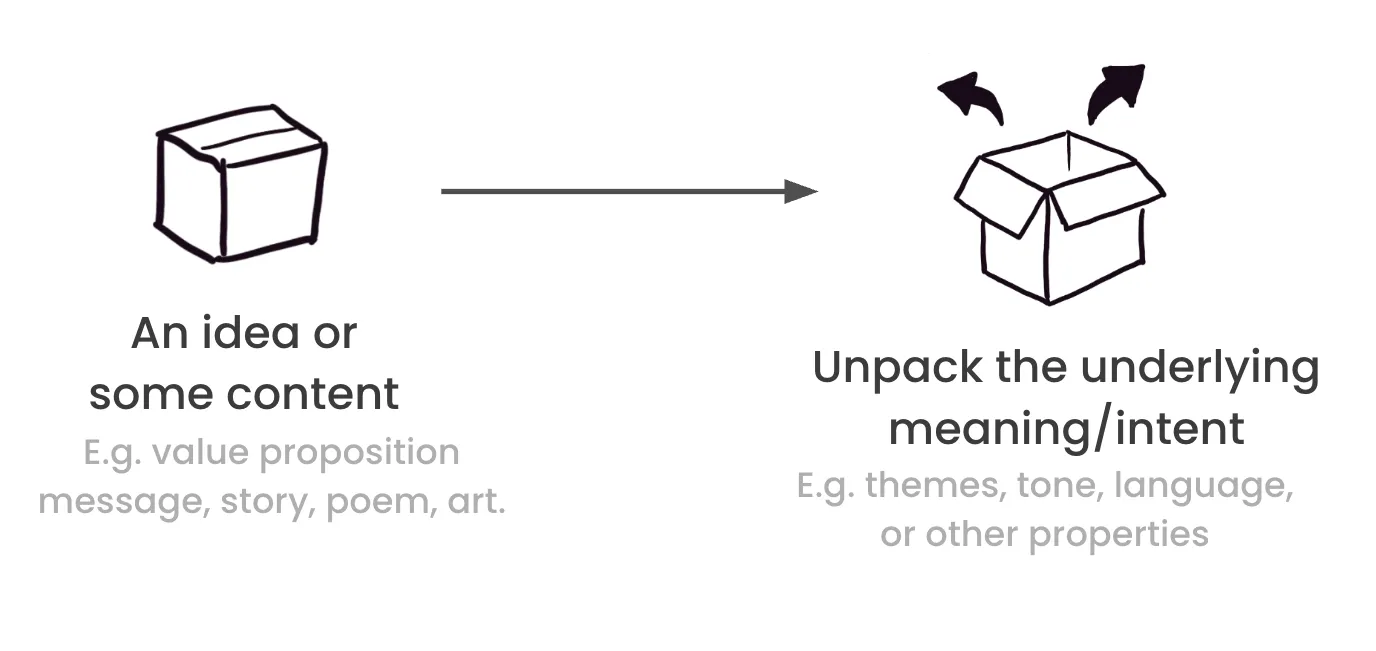
Analyse content and extract properties (for example meaning, themes, language, tone).
Why it works
LLMs encode how meaning tends to be structured in language—statistics over text—and can reflect intent encoded in wording.
Examples of use
- Extract something specific from user feedback
- Analyse assumptions or themes in a piece
- Critique an article or other content
- Check for biases or gaps in thinking
- Steelman an opposite view
- Check how content is framed
- Divergent thinking (spot narrow framing / bias)
- Critical thinking (steel-man counterarguments)
Usage example (1)
%CONTEXT%
Describe the content and insert it

%TASK%
Give me concise list of the [themes | properties | language | tone] for this text
Usage example (2)
%ARTICLE%
Insert article

%TASK%
Analyse using "Toulmin Model of Argumentation"
Supporting prompts
Add a line such as:
List some frameworks for analysing [what you want to analyse]Then plug in the framework you need (Toulmin, stakeholder lens, risk framing, etc.).
References
Background on distributed / contextual semantics (why models can surface themes, tone, and structure) plus structured argument frameworks:
- Jurafsky & Martin, Speech and Language Processing (3rd ed. draft) — chapters on representations, semantics, and sequence modelling relevant to “meaning from statistics.”
- Mikolov et al., Distributed Representations of Words and Phrases — classic paper on semantic structure from co-occurrence (the intuition behind embeddings predating transformers).
- Ethayarajh, How Contextual are Contextual Word Representations? — analyses how strongly contextual layers encode linguistic properties (helpful mental model for extraction-style prompts).
- Manning et al., Emergent linguistic structure in artificial neural networks trained by self-supervision — PNAS study on structure emerging from self-supervised training (open-access PMC full text).
- Toulmin, The Uses of Argument — original treatment of the Toulmin model (claim, data, warrant, etc.) often used as an extraction/critique scaffold.
- Stanford Encyclopedia of Philosophy, Toulmin model — concise overview if you want a free secondary summary before applying the framework in prompts.
Also in this series